
In this guide
Ethernet pricing confuses people because the material cost is genuinely low. The quote is almost entirely labour and access, and understanding that makes two bids comparable.
What a drop actually involves
Path
Finding a route from the outlet location back to the rack that does not cross a fire break, a structural member, or a finished surface that cannot be opened.
Pull
Running the cable without exceeding bend radius or pulling tension, both of which degrade performance in ways that only show up under load.
Terminate
Punching down at both ends to the correct standard, consistently.
Test
Certifying each run, rather than plugging in a laptop and seeing a link light.
Patch and finish
Wall plate, patch panel, labelling at both ends, and making good any surface that had to be opened.
Why new construction and retrofit are different trades
Before drywall, a drop is minutes of work. After drywall, the same drop may require fishing a wall, drilling a plate, working around insulation, and repairing finishes. In some layouts there is no route at all without opening a ceiling.
The cable costs almost nothing. The path is the product.
Cat6 or Cat6A
| Cat6 | Cat6A | |
|---|---|---|
| 10 Gigabit | Up to 55m under favourable conditions | Full 100m |
| Cable size | Thinner, easier in tight pathways | Thicker, needs larger conduit and wider bend radius |
| Where it fits | Most residential drops | Backbones, longer runs, anything intended to outlast the equipment |
The useful way to decide is to ask what you would regret. Cable is the part of the installation that is hardest to change later, so it is reasonable to specify it above current requirements even when the equipment does not yet need it.
Things worth insisting on
- Number of drops and their locations, agreed on a plan
- Cable category and whether it is riser or plenum rated as the space requires
- Termination standard, used consistently at both ends
- Certification testing, with results provided
- Labelling at the outlet and at the patch panel
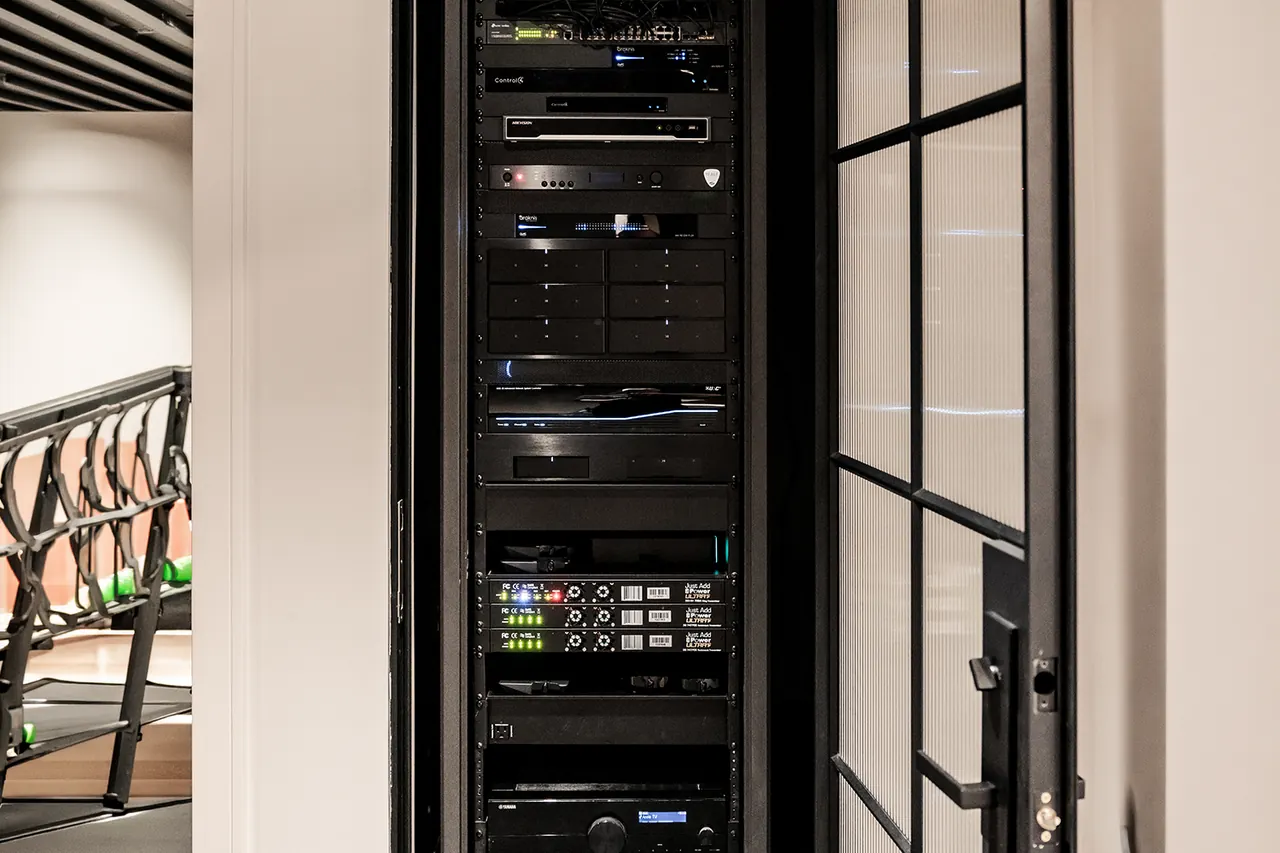
- Patch panel, rack or enclosure, and who supplies them
- Who repairs finishes, and to what standard
A cable can link at full speed and still fail certification. Testing measures the things that cause intermittent faults later, which is exactly the kind of problem nobody can diagnose a year on.
Where to put drops people forget
Ceiling centre of the areas needing coverage, not wherever is convenient.
Even where streaming is the plan. Wired is one less thing to troubleshoot.
Two drops rather than one. The second costs very little while the wall is open.
Power over ethernet avoids a separate power run at each location.
Plan the drops before drywall
Send a floor plan and we will mark where drops should go and why.
Request a network assessment