
In this guide
Structured cabling is the one part of an office fit-out that nobody sees and everybody depends on. It also outlasts the furniture, the equipment and usually the tenancy.
First, a distinction worth making
Structured cabling is the physical infrastructure inside the building: the cable, pathways, racks and terminations. Internet service is a product you buy monthly from a provider. They get conflated constantly, and the result is a budget that covers one and not the other.

How the layout is decided
Locate the distribution point
The main frame wants to be central, secure, ventilated, and powered. Being central shortens every run that follows.
Work out whether one frame is enough
Horizontal runs are limited to 100 metres including patch leads. Larger floor plates need intermediate frames fed by a backbone.
Plan pathways before drops
Trays, conduit and sleeves have to be coordinated with other trades and agreed before ceilings close.
Then place drops
Desks, access points, displays, cameras, door controllers, printers and anything else with a network port.
Add capacity
Spare drops and spare pathway capacity cost very little now and a great deal later.
Spare capacity is the cheapest thing you will ever buy during a fit-out.
What gets missed
Placed by coverage requirement, not by what was convenient to wire.
Access control readers and controllers need network and power planned with the door schedule.
Displays, cameras, microphones and control all want their own drops.
Open-plan areas that will be partitioned later need pathway capacity now.
Certification and documentation
Every run should be tested to its category and the results handed over. Alongside that, the useful deliverable is documentation: a port map, labelling at both ends, and a drawing showing what is where. This is what makes the next piece of work straightforward instead of exploratory.
- Certification results for every run
- Port map tying each outlet to a patch panel position
- Labelling applied at the outlet and the panel
- As-built drawing showing routes and frame locations
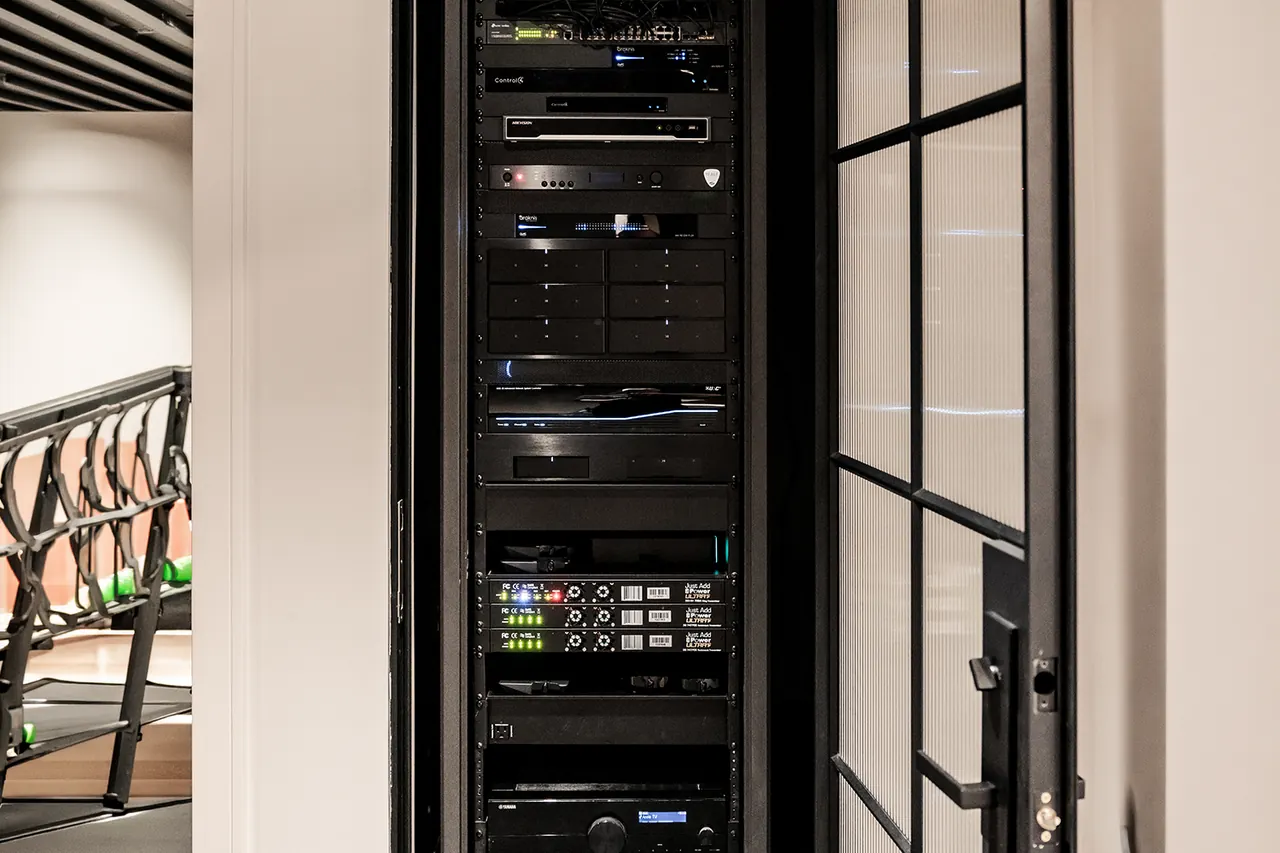
- Rack elevation showing what is mounted where
Undocumented cabling turns every future change into an investigation. The cost of that investigation, repeated over a tenancy, dwarfs the cost of labelling it properly on day one.
Plan the infrastructure early
Send drawings and we will come back with a cabling plan, frame locations and what to coordinate with the other trades.
Request a site assessment