
In this guide
Shades are priced per opening, which sounds simple until you realise how many variables sit inside each one. These are the five that move the number most.
The opening itself
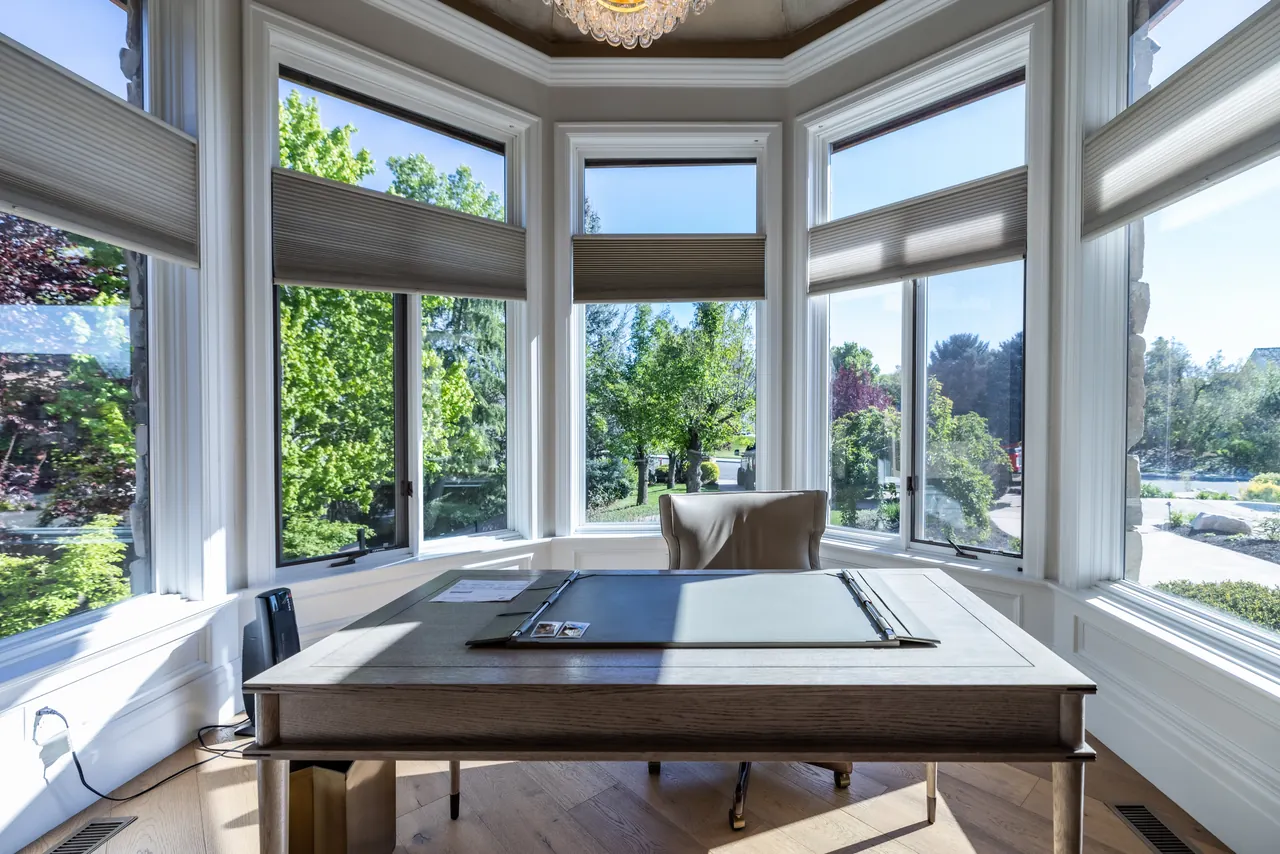
Width matters more than height. A wide shade needs a larger tube and a stronger motor to avoid deflection across the span, and past a certain width the only correct answer is to split it into two shades that move together. That decision is structural, not aesthetic.
Fabric
| Fabric type | What it does | When it is right |
|---|---|---|
| Solar / screen | Cuts glare and heat while keeping the view | Living spaces and anywhere with a view worth keeping |
| Light filtering | Softens light, provides privacy, not darkness | Bedrooms where total darkness is not the goal |
| Blackout | Blocks light through the fabric itself | Bedrooms, theaters, media rooms |
Light comes around the edges, not just through the fabric. Genuine room darkening needs side channels or a pocket detail, and that has to be planned with the window detail rather than added afterwards.
How the motor gets power
No wiring, so retrofit-friendly. Batteries need recharging or replacing, and that means access to every shade.
Nothing to recharge, consistent performance, and the right answer for high or hard-to-reach openings. Needs power at the opening before finishes.
This is the decision most affected by timing. During construction, hardwiring is a small addition. After finishes, it may not be practical at all, which is why battery shades are common in retrofits.
Mounting and how it is finished
A shade mounted inside a pocket detail disappears into the ceiling. A shade on a visible bracket does not. The pocket is a construction item coordinated with the builder, and it meaningfully changes both the cost and the result.
Whether it integrates
Shades that run on their own remote are one product. Shades that drop when the projector turns on, lift at sunrise, and appear on the same keypad as the lighting are part of a system. The hardware can be identical; the difference is the control layer and the programming behind it.
The same shade can be a product or part of a system. The quote reflects which.
Comparing two shade quotes honestly
- Fabric, openness factor and colour for every opening
- Whether shades are battery or hardwired
- Inside or outside mount, and whether a pocket is included
- Who is responsible for measuring, and when
- Whether grouped shades are aligned to move together
- What the shades integrate with, if anything
Measurement responsibility is worth settling explicitly. Shades are manufactured to the measurement supplied, and a remake for an incorrect measurement is nobody's favourite conversation.
Start with a window schedule
Send the openings and we will come back with fabric, power and mounting recommendations for each.
Request a shade consultation