
In this guide
A box of smart plugs costs very little. A house where lighting, shades, audio, climate and cameras behave as one system costs considerably more, and the difference is almost entirely in things you cannot see on a shelf.
It is worth being direct about this, because the comparison people make is usually unfair in both directions. Off-the-shelf devices are genuinely good and genuinely cheap. They are also separate products that happen to share a house. What follows is what you are paying for when you pay for integration.
Scope is the first and largest variable
"Smart home" covers an enormous range. One room of lighting control and whole-house integration are different projects that happen to share a phrase.
| Scope | What it usually includes | What drives the cost |
|---|---|---|
| Single system | Lighting control, or shades, or audio, on its own | Device count and whether walls are open |
| Several systems, one app | Two or three systems sharing one interface | Control processor, programming, integration testing |
| Whole-house integration | Lighting, shades, audio, climate, cameras, access, all coordinated | Infrastructure, processor capacity, programming depth, commissioning |
Infrastructure you only buy once
A reliable system sits on a wired network with adequate coverage, a rack to terminate it, conditioned power, and pathways to each device. That foundation costs real money and it does not feel like a feature. It is also the thing that determines whether the system still works in five years.
The parts that make it reliable are the parts you never see.
This is also why retrofits price differently. In a finished home, every drop is a labour exercise, and some locations simply cannot be reached without opening a wall.
Programming is the product
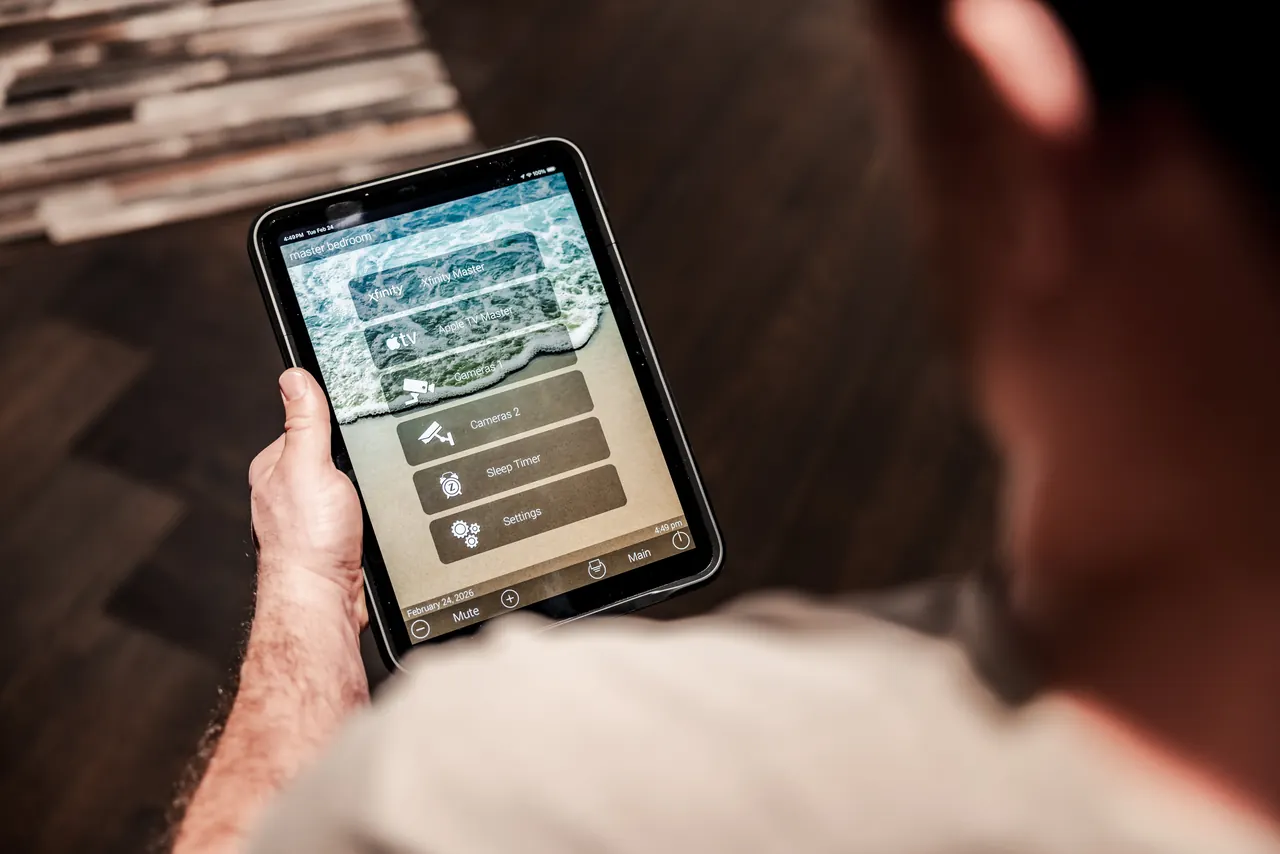
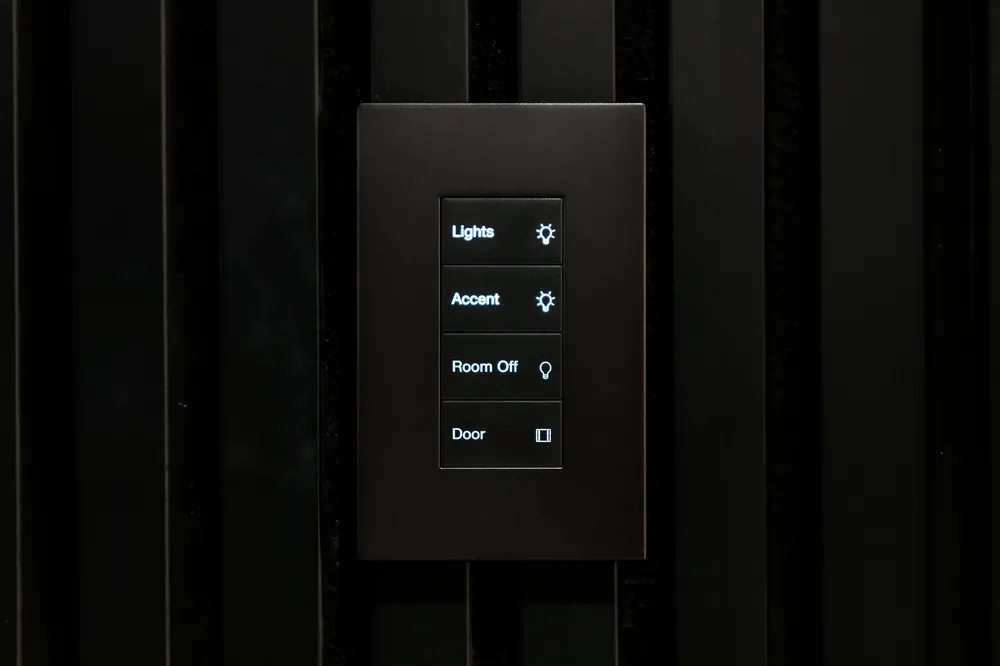
Devices arrive generic. Making a house behave the way a particular household lives is bespoke work: scenes that match actual routines, keypads engraved for what the buttons do, schedules that follow the seasons, and logic that handles the exceptions.
- Scenes built around how the household actually uses each room
- Keypad layouts and engraving agreed before the order is placed
- Away, arrival and bedtime behaviour across all systems
- Naming that is obvious to a guest, not just to the installer
- Documented configuration so a future technician can pick it up
What makes two quotes differ
Wireless lowers installation cost and raises long-term variability. Wired costs more up front and behaves predictably.
A larger house with more integrations needs more capacity. Undersizing it is cheap now and expensive later.
Testing every scene in every room takes time. Quotes that omit it look cheaper and finish unfinished.
Whether anything happens after handover, and what it costs when it does.
Where DIY genuinely makes more sense
Being honest about this matters. If the goal is a few smart bulbs, a video doorbell and a speaker, off-the-shelf products do that well and integration is not worth paying for. The case for a designed system starts when you want multiple systems to behave as one, when reliability matters more than novelty, or when the house is being built and the infrastructure decisions are live anyway.
If you can describe what you want in terms of individual devices, you probably do not need an integrator yet. If you find yourself describing behaviour across rooms, you do.
Start with an assessment
We will walk the house or the plans and tell you what is worth integrating and what is better left alone.
Request an assessment