
In this guide
The fastest way to spend a studio budget badly is to start with the equipment list. The room decides how good the output can be, and no microphone compensates for a room that was never treated.
The room comes first
Two problems, often conflated, and worth separating before anything is ordered.
| Acoustic treatment | Soundproofing | |
|---|---|---|
| Solves | Reflections inside the room | Noise entering or leaving the room |
| Method | Absorption and diffusion on surfaces | Mass, decoupling, sealing, duct design |
| Retrofittable | Yes | Rarely, and not cheaply |
| Symptom if skipped | Hollow, roomy recordings | HVAC rumble and outside noise in every take |
Treatment can be added later. Isolation generally cannot, which makes it a construction decision rather than an equipment one.
Treatment you can add later. Isolation you cannot.
How many positions, and fixed or flexible
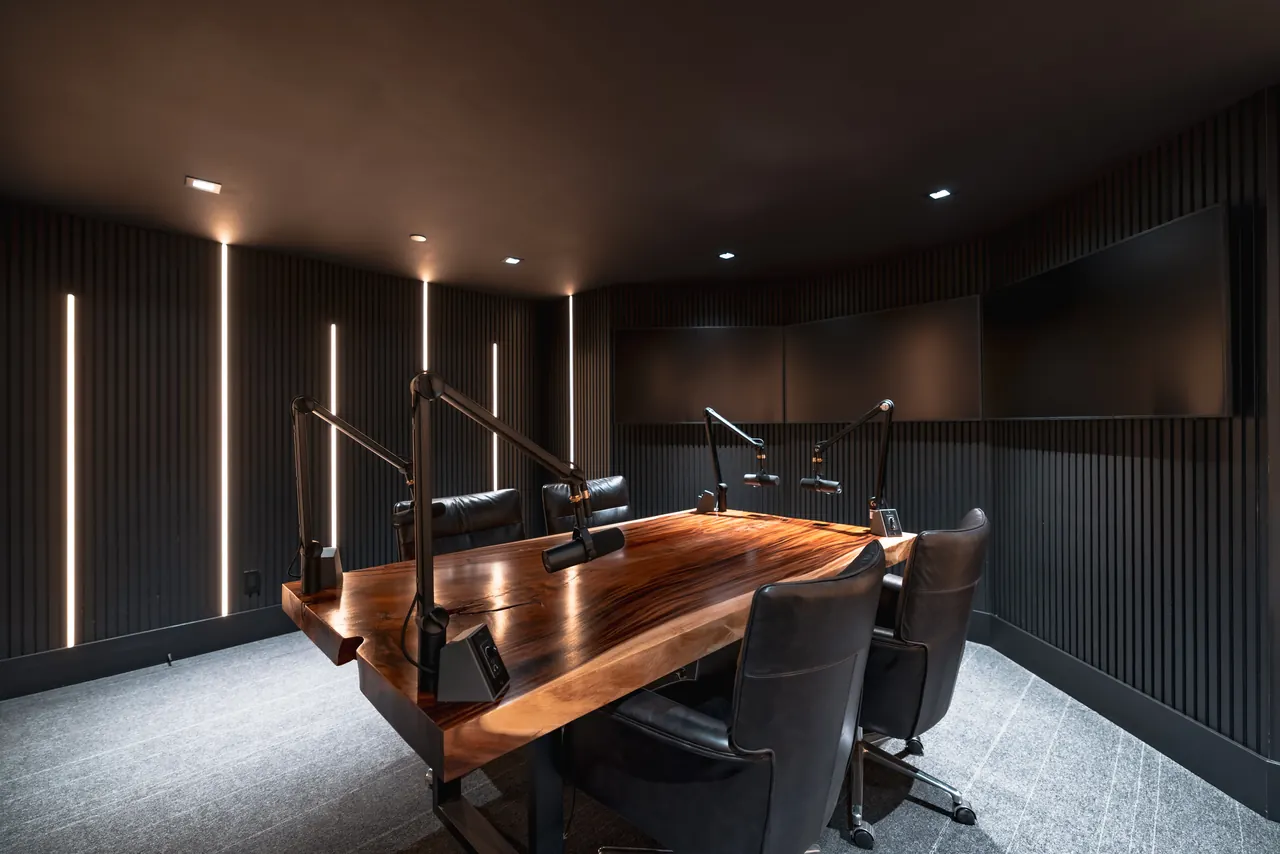
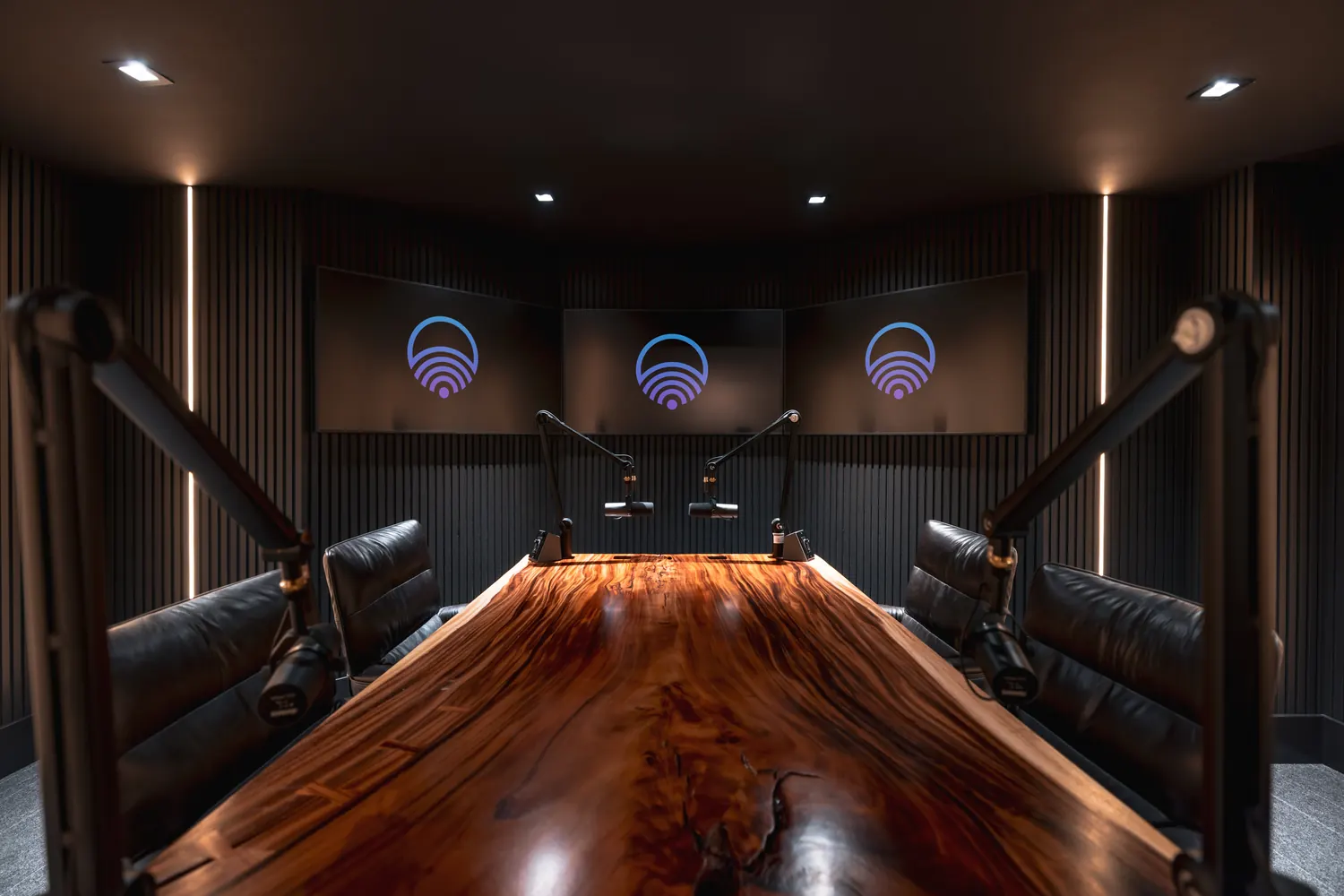
A two-person studio and a four-person studio are different rooms, not the same room with more chairs. Position count determines microphone count, camera angles, table size, and how much treated surface you need behind each seat.
Cameras and framing
A wide and a close. Simple, reliable, enough for most interview formats.
Individual framing per guest plus a wide. Better output, more switching load.
One camera covering several framings, useful in tight rooms. Moves are visible on camera unless done off-shot.
Lighting is part of the build
Studio lighting is not a lamp. It is fixture placement that avoids glare on glasses, separates subjects from the background, and produces the same result every session. Because it is fixed, it should be planned alongside the ceiling and the treatment rather than added at the end.
Live switching or edit afterwards
This decision changes the equipment list substantially and should be made on staffing, not on preference.
Record and edit later
Cheapest to build, most flexible in post, needs someone to do the editing every episode.
Live switch
More equipment and someone operating it, but the episode is finished when recording stops.
Record isolated feeds and switch live
Both options preserved. More storage, more cabling, more capability.
What belongs behind the walls
- Audio and video cable paths from each position to the rack
- Network drops for cameras, encoders and control
- Power with enough circuits, conditioned, at the rack and at each position
- Ventilation that does not put noise into the room
- Service access to the rack without dismantling the set
What is the show, and who operates it? A room built for a solo host who edits later is a different room from one a marketing team uses to turn around video weekly.
Design the room, then the kit
Tell us the format and who runs it and we will come back with a room plan and a realistic scope.
Discuss a studio design